As part of our Lunch & Learn series we were joined by Dr Clare Spencer. She gave her advice and tips on chronic pain during menopause.

Chronic pain affects more than half of women in midlife, according to the International Menopause Society. But how much of that pain is connected to menopause, and what can we do about it?
For our latest Lunch & Learn, Deborah Garlick and Sally Leech of Henpicked: Menopause in the Workplace, were joined by menopause specialist Dr Clare Spencer to explore the connection between menopause and chronic pain.
With Chronic Pain at Midlife the theme for World Menopause Day 2026, the conversation explored joint and muscle pain, migraines, existing health conditions and the practical steps that can help.
What is the connection between menopause and chronic pain?
Deborah: When I first heard that chronic pain was this year’s World Menopause Day theme, I wondered what it actually covered. It’s such a huge subject. How does menopause affect the pain we experience?
Dr Clare Spencer: It really is a huge subject, and an important one. More than half of women in midlife experience chronic pain, and hormonal changes during menopause can play a significant role.
Oestrogen doesn’t just affect our reproductive system. It also influences how nerves transmit pain signals and how our brain processes those signals.
During perimenopause, oestrogen levels fluctuate, and then decline as we move through menopause. These changes can affect our sensitivity to pain.
There are three important things to understand. We can develop new pain symptoms during menopause, such as joint and muscle aches or migraines. Existing chronic pain conditions can become worse. And hormonal changes can affect how we perceive and experience pain.
Add in poor sleep, stress, anxiety or low mood, and you can begin to see why this is such a complex issue.
Why do we experience joint and muscle pain during menopause?
Deborah: Joint aches and stiffness are something so many women recognise. I certainly notice it myself, particularly when I first get up in the morning! How do we know whether it’s menopause, ageing or something else?
Clare: Joint and muscle symptoms are incredibly common during the menopause transition.
Women often describe generalised aches and pains or stiffness, particularly first thing in the morning. It might affect their hands, feet, knees or hips. There isn’t necessarily one particular joint involved.
But it’s important to recognise that not every ache or pain is caused by menopause. We also need to consider ageing, injuries and conditions such as osteoarthritis or inflammatory arthritis.
If you’re experiencing mild, generalised stiffness that improves as you get moving, menopause could be contributing.
However, if pain is severe, affects your ability to function or is concentrated in one particular joint, you should speak to your doctor. The same applies if a joint is swollen, hot or red, or if morning stiffness doesn’t improve fairly quickly.
We shouldn’t automatically assume that new pain is simply part of menopause.
Deborah: And keeping moving is important, isn’t it? Even when we’re feeling a little stiff?
Clare: Absolutely. Movement is incredibly helpful. You might find you need a little longer to get going in the morning or that you don’t recover from exercise quite as quickly as you used to.
But don’t stop moving. If you’re unsure what’s suitable, speak to a physiotherapist who can help you find the right exercises.
Can menopause make migraines worse?
Deborah: Migraine is another area we hear a lot about. Can migraines get better or worse during the menopause transition?
Clare: They can, and it’s important to recognise that migraines are much more than bad headaches.
Migraine is a neurological condition. As well as severe head pain, people may experience nausea, sensitivity to light and sound and sometimes visual or sensory disturbances known as aura.
For some women, migraines are particularly sensitive to hormonal fluctuations.
That’s why some women experience migraines around their periods, and why symptoms can worsen during perimenopause when oestrogen levels are fluctuating considerably. For some, migraines improve after menopause when hormone levels become more stable, although that’s not the case for everyone.
Sleep, stress and anxiety can also influence migraine symptoms, so it’s important to consider the whole picture.
My advice would be to keep a symptom diary. It can help you identify patterns and gives your doctor useful information when discussing treatment.
HRT may help some women, but there are also other medications and lifestyle approaches that can make a difference.
What happens when menopause overlaps with an existing pain condition?
Deborah: Menopause doesn’t happen in isolation, does it? What if someone is already living with a condition that causes chronic pain?
Clare: That’s a really important point.
Conditions such as fibromyalgia, chronic migraine, pelvic pain and endometriosis-related pain can all be affected during the menopause transition.
For example, someone with fibromyalgia may already experience widespread musculoskeletal pain. Hormonal changes, disrupted sleep and other menopause symptoms can make that pain more difficult to manage.
And something I really want people to understand is that pain is real.
When we talk about the brain processing pain differently, we’re not suggesting that someone is imagining their symptoms. There are genuine changes in the nervous system and the chemicals involved in pain pathways. Oestrogen influences some of these processes, including those involving serotonin.
The important thing is to acknowledge what’s happening and seek support. There may be several different ways to help manage your symptoms.
Please don’t suffer in silence.
Can HRT help relieve chronic pain?
Deborah: We’ve talked about the role of oestrogen in pain. Does that mean replacing hormones through HRT can help?
Clare: For some women, yes. In clinical practice, we certainly see women who experience improvements in pain when taking HRT.
HRT can sometimes take the edge off pain. It may also improve sleep and mood, which can have a positive effect on how someone experiences pain. But we need more research, and it’s important not to think of HRT as the only answer.
Some people may also benefit from physiotherapy, talking therapies, lifestyle changes or non-hormonal medication.
Frozen shoulder is a good example. It’s relatively common in women around menopause age, but we don’t yet know whether menopause directly causes it, and there’s very little evidence that HRT will help.
So even if menopause is contributing to your symptoms, you may need other approaches to manage them effectively.
What practical things can we do to help ourselves?
Deborah: One thing I find really helpful is Pilates. I feel more flexible and relaxed afterwards, and it seems to help with some of those aches and pains. What would you recommend?
Clare: The most important thing is to keep moving and find something that works for you.
We hear a lot about the importance of cardiovascular exercise and maintaining muscle strength during menopause, and those things are valuable. But that doesn’t mean everyone needs to lift heavy weights or follow a particular exercise programme.
For some people, yoga, Pilates, walking or bodyweight exercises may be more appropriate.
If you’re living with chronic pain, pacing yourself is also really important.
Sometimes people have a good day and decide to do absolutely everything, only to find they’re completely exhausted or in more pain afterwards. Try to find a manageable level of activity rather than doing too much on the days you feel better.
And if you need advice, a physiotherapist can help.
The message is simple: move in ways that work for you.
Deborah: It’s also about being kind to ourselves, isn’t it? Rather than focusing on what we can’t do, recognising what we can do and starting small.
Clare: Exactly. Pain can create a difficult cycle.
You don’t sleep well, your pain feels worse, you stop exercising, you become less socially active and that can affect your mood and wellbeing.
Talking therapies can be helpful in breaking that cycle. Not because the pain is imagined, but because they can help people find ways of managing its impact.
Even small steps can make a difference.
Are joint injuries more likely during perimenopause?
Sally: We’ve had a question about whether women are more likely to experience joint injuries during perimenopause.
Clare: We don’t yet have a definitive answer, and this is an area where more research is being carried out.
We do know that oestrogen plays a role in joint inflammation, connective tissue and maintaining fluid within joints. As oestrogen levels decline, it’s possible that existing vulnerabilities may become more noticeable. But we need more evidence before drawing firm conclusions.
Can testosterone help with pain?
Sally: A number of people have mentioned testosterone. Some say it’s made a real difference to how they feel. What does the evidence tell us?
Clare: There are some small studies suggesting potential benefits for pain, but the quality of evidence is poor.
When the available research has been reviewed together, it hasn’t demonstrated a clear benefit for pain. That doesn’t mean we should dismiss women’s individual experiences. But we do need to distinguish between what people report and what the research currently supports.
The established evidence for testosterone treatment in menopause relates to sexual desire, rather than chronic pain.
If your GP isn’t able to initiate testosterone treatment, you can ask about referral to an appropriate specialist.
Can hypnotherapy or acupuncture help?
Sally: We’ve also had questions about complementary therapies, including hypnotherapy and acupuncture.
Clare: Some complementary approaches can be helpful for certain types of chronic pain.
Hypnotherapy, for example, has evidence of benefit in some conditions and may also help with sleep or anxiety, which can influence pain. Acupuncture may help with some pain conditions too, although the evidence varies.
It’s important to check the qualifications of anyone providing treatment and make sure the approach is appropriate for you.
Do antidepressants interfere with HRT?
Sally: Someone has asked whether medications such as duloxetine block hormones or interfere with HRT.
Clare: Duloxetine is an SNRI, a medication that affects serotonin and noradrenaline. It can be used to treat several conditions, including certain types of nerve pain, depression and anxiety.
It doesn’t work by blocking hormones. For some people, it can be appropriate to use medication such as duloxetine alongside HRT, depending on their individual circumstances.
Can you take HRT if you have migraine with aura?
Deborah: This is something I think is particularly important to clarify. Some women are told they can’t have HRT because they experience migraines. Is that right?
Clare: No. Having migraine with aura doesn’t automatically mean you cannot take HRT.
Migraine with aura is associated with a slightly increased risk of stroke, which is why certain combined oral contraceptive pills aren’t recommended.
But HRT is different.
Women with migraine with aura may be able to use HRT, with oestrogen delivered through the skin using a patch, gel or spray, alongside suitable progesterone where needed. Sometimes we need to start with a very low dose and adjust treatment carefully, particularly for women whose migraines are sensitive to hormonal changes.
If you’re struggling to get appropriate advice, ask to see a GP with a special interest in menopause or request a referral to a menopause specialist.
Can supplements help with joint and muscle pain?
Sally: Finally, we’ve had lots of questions about supplements, particularly vitamin D, magnesium and collagen. Can they help?
Clare: Vitamin D is important, and very low levels can contribute to musculoskeletal pain.
It’s worth considering whether you may be deficient, particularly during the winter months.
Calcium is important for bone health, but you generally only need a supplement if you’re not getting enough through your diet.
For collagen, there isn’t convincing evidence that supplements help with joint pain.
And with magnesium, we don’t yet have enough good-quality evidence to recommend it routinely for menopause-related pain.
A significant magnesium deficiency can cause muscle symptoms, but that’s different from assuming everyone experiencing aches and pains needs a supplement.
The key is to understand whether you actually have a deficiency and what might be causing your symptoms.
What should we take away from this conversation?
Deborah: We’ve covered so much, and I think one of the most important things we’ve learned is that menopause and chronic pain can be connected in several different ways.
Hormonal changes may trigger new symptoms, make existing conditions worse or change how we experience pain. But we’re all different, and it’s important to understand what’s happening in our own bodies rather than assuming everything is caused by menopause.
Clare: Absolutely. There isn’t one answer that works for everyone. Seek help if you’re experiencing new or worsening pain. Explore the different treatment options available and don’t be afraid to go back for further advice if something isn’t working.
And keep moving in whatever way works for you.
Deborah: A huge thank you to Clare for helping us understand such an important subject, to Sally for bringing together everyone’s questions and to everyone who joined us and shared their experiences.
Watch the full conversation
Missed the session or want to hear more? Watch the recording of our Menopause and chronic pain Lunch & Learn.
Our free Lunch & Learn sessions bring together experts to explore menopause, menstruation and wellbeing, helping people better understand their health and the support available.
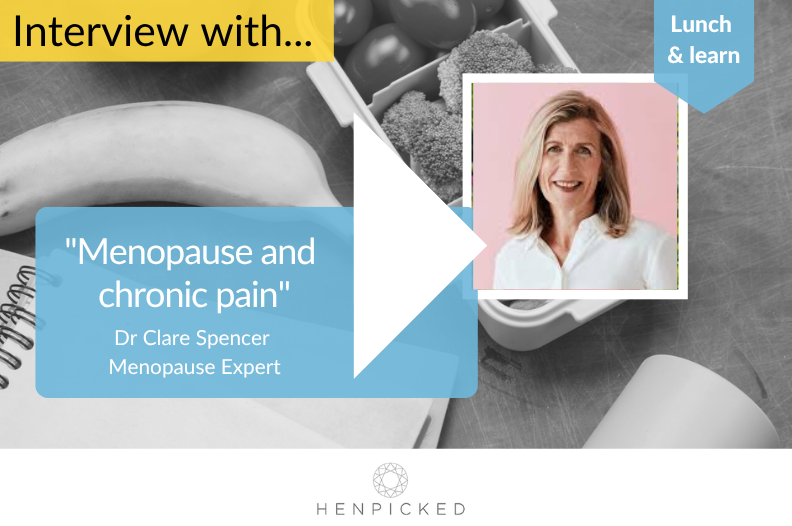
Henpicked Menopause in the Workplace’s Deborah Garlick and Sally Leech were joined by Dr Clare Spencer.
Dr Clare Spencer, GP Partner and British Menopause Society registered menopause specialist, member of the BMS advisory council and BMS trainer. She qualified from Cambridge University and is a Fellow of the Royal College of General Practitioners and a Member of the Royal College of Obstetricians and Gynaecologists.
Alongside her work as a GP Partner, she runs a specialist NHS menopause service and provides specialist menopause care at Spire Hospitals in Leeds and Harrogate. Her clinical work gives her extensive experience of the many different ways menopause can present, including when symptoms sit alongside other health conditions.
If you’d like to book an appointment with Dr Clare, contact [email protected]
Check out the rest of Henpicked’s Lunch & Learn video series!

Available from Bloomsbury, Waterstones, Amazon and good bookshops.