As part of our Lunch & Learn series we were joined by Dr Clare Spencer of My Menopause Centre.
Changes in mood are a symptom of the menopause. Some women develop depression and some may have experienced it before. So how do you tell what’s going on and what you can do about it?

Henpicked: What are the typical symptoms of depression?
Dr Clare Spencer: We use the term depression to cover a wide range of feelings, from being a bit low and sad right to the end of the spectrum of major depressive illness. Here, the mood is so low it significantly interferes with function. But when we look at what it means medically, you’ll see there’s a massive overlap with some symptoms of the menopause.
Depression is defined as being persistently sad or experiencing a low mood nearly every day with loss of interest or pleasure in most activities. Symptoms include fatigue, loss of energy, feeling worthless, excessive or inappropriate guilt, recurrent thoughts of suicide or death, suicidal attempts, diminished ability to think or concentrate, increased indecision, physical agitation, slowing down, loss of ability to sleep or sleeping too much, and change in appetite or weight changes. This is from the official criteria for diagnosing depression and you can see a lot of these are similar to menopausal symptoms.
Henpicked: What could cause these feelings from a menopause perspective?
Dr Clare Spencer: We know that some brains are more sensitive to changes in hormone levels. In perimenopause we have big swings in hormones and drops in oestrogen. As we go through menopause the oestrogen level is low and stays low. Depression and low mood can occur because the drop in oestrogen can pull down the serotonin in your brain (the happy hormone). There are other biochemical changes, but ultimately it’s the hormonal change that results in the shifts in chemicals in your brain that can pull your mood down.
Add onto that other things going on in life: physical symptoms of menopause can impact on your mood, work stresses, families, ageing parents and so on. This can all conspire to pull your mood down in some women.
Henpicked: How do we know if menopause is causing depression?
Dr Clare Spencer: This is really difficult. There isn’t one test that tells us your mood is low because of menopause or because of depression. But there is an overlap and there are some clues. Women who have suffered with premenstrual syndrome or premenstrual dysphoric disorder, women who felt really good in pregnancy but then have postnatal depression, those who felt more depressed in pregnancy: all may struggle more with their mood as they go through the menopause transition.
Think how your symptoms have developed. Have they developed alongside other menopause transition symptoms, which indicates they might be part and parcel of the menopause picture? Or is it major depression with loss of function or impaired function? It’s not black and white, it’s more of a spectrum. The number of and severity of symptoms and how they are impairing function, and thoughts of suicide or self harm, could all help tell you if you have major depression.
Henpicked: What are the best ways to manage it?
Dr Clare Spencer: If you’re experiencing suicidal thoughts or thoughts of self harm, call 111 or 999. See your GP. Whatever you do, don’t leave those thoughts lingering. In terms of other general management, like menopause care there is a wide range of approaches. For some women lifestyle changes will make all the difference. If you’re on the minor end of the spectrum you might be able to tweak your lifestyle and it will help. Things like running, yoga, meditation, alternative therapies. There is really good evidence that CBT can help with psychological symptoms of menopause. It helps challenge behaviours and thoughts attached to feelings and mood.
There is good evidence that if your symptoms are related to menopause (acknowledging how difficult it can be to establish this) HRT and giving the oestrogen back can be more effective than antidepressants. We know that lots of women are given antidepressants from GPs when they present with these symptoms. And for some women they will help take the edge off. If women don’t want to take or have been advised not to take HRT, antidepressants can have a role to play. For those suffering from major depression that is affecting function, antidepressants have a very important role to play. But if your mood is hormone related then HRT is probably the most effective option.
It’s important to note that sometimes HRT doesn’t give you the whole answer. Looking to other therapies as well as HRT could help.
Henpicked: What about anxiety?
Dr Clare Spencer: Some people will be more prone to sink into the low mood feeling depression — down, depressed or hopeless . Others may be more prone to anxiety, and some can have a bit of both. Similar processes are causing both depression and anxiety — reactions to changes of hormones. Management and treatment are the same for both.
Henpicked: Any tips on how to be less judgemental with ourselves?
Dr Clare Spencer: We’re so quick to blame ourselves, to think that we’re not being strong enough. My biggest tip would be to appreciate that the root cause is not within your control. These are hormonal changes within your brain. Once you accept that it’s then looking to the positives to try to challenge those feelings. You may need somebody to help you with this. Again that’s not a failing, you just need someone to guide you through challenging those negative thought processes, and/or medication.
Henpicked: How about supporting others going through this?
Dr Clare Spencer: It’s about educating yourself and understanding what’s going on behind the scenes that is manifesting in this way, being supportive and not judgemental. If you’re in a work environment, there may be support and resources you can point people to within your organisation, always being mindful not to push or alienate your colleague who may not recognise their own symptoms.
Henpicked: Can testosterone help with depression?
Dr Clare Spencer: Testosterone is one of three important hormone made by the ovaries and your levels slowly decrease from around your 30s. This affects some women more than others. One of the main symptoms that we know about is loss of libido, and this can also be the end point of all the symptoms we’ve spoken about, low self esteem, low in energy, feeling tired. Testosterone can help with libido for about two thirds of women who take it. In terms of mood the evidence is really poor. Anecdotally people say it is the icing on the cake after they’d started HRT. Evidence for use in depression is scarce but it can help a small percentage of women who take it.
It’s not a licensed medication for women in this country so some GPs won’t prescribe. This is being looked at by clinical commissioning groups (CCGs) and there are some parts of the country where GPs are now allowed to initiate it. If they aren’t comfortable prescribing it then ask for a referral to a menopause clinic or gynaecologist.
Henpicked: Can progesterone affect our mood?
Dr Clare Spencer: Some women are really sensitive to progesterone. This can be really challenging for those wanting to take HRT as it can leave them feeling low, even feeling suicidal. Progesterone is important to keep the womb lining thin (which oestrogen can thicken). The challenge is to work with your doctor to find a form of progesterone you can take. If you swallow progesterone capsules the breakdown products from your stomach can affect brain and mood. But if you put a capsule into your vagina or use pessaries it’s not broken down in the same way and can have lesser impact on mood. This isn’t licensed at the moment and there is less evidence of effectiveness than swallowing it, but it is increasingly being used as a way of delivering progesterone by many women.
Henpicked: Can we take serotonin tablets?
Dr Clare Spencer: Serotonin itself isn’t available on prescription. Selective serotonin reuptake inhibitors (SSRIs) are widely prescribed antidepressants. They stop serotonin that is being released from being gobbled up, keeping the serotonin levels in your brain buoyant.
Henpicked: How can we check our oestrogen levels?
Dr Clare Spencer: There is poor linking between what your oestrogen level number is and how you’re feeling. Some even feel worse when oestrogen levels are at higher level of range. Oestrogen levels can help work out if you are absorbing well from the method of HRT you are using, though they are less helpful if you take oestrogen in tablet form.
Henpicked: Any advice around recent HRT shortages?
Dr Clare Spencer: The initial issue was around Oestrogel primarily. Supplies ran low, but a lot of resources have been put into getting it back. One pump is equivalent to a 0.5mg sachet of Sandrena or a 25mcg patch, so switching to patches is a good option. Unfortunately a lot of people have done this, so there have been some patch shortages. Some women also switched to Lenzetto, but again there are shortages. The best thing to do is talk to your doctor about which you could switch to depending on supplies in your area.
Watch the video here:
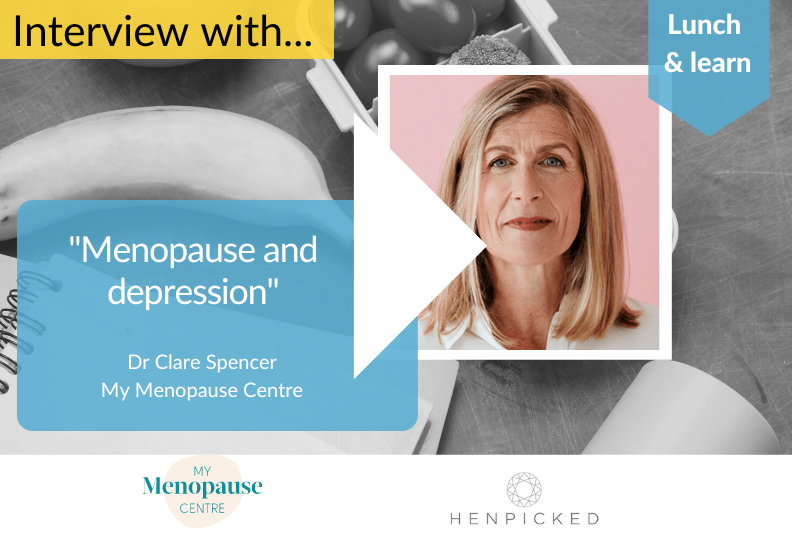
Henpicked Menopause in the Workplace’s Sally Leech was joined by Dr Clare Spencer of My Menopause Centre.
Dr Clare is a registered menopause specialist and an NHS GP. She qualified from Cambridge University and holds membership of the Royal College of Obstetricians and Gynaecologists and the Royal College of General Practitioners. She initially trained in obstetrics and gynaecology where she gained a Doctor of Medicine for research in fetomaternal medicine.
As well as her role of Clinical Director at My Menopause Centre, she currently runs an NHS menopause service and is a GP partner in a practice in Leeds. She is also a British Menopause Society menopause trainer and is involved in educating GPs about the menopause transition through talks, lectures and seminars. She wrote the menopause training module for doctors.net and has written for the Primary Care Women’s Health forum publication, Her Life Her Health, on a variety of menopause-related topics.