Are you ready for some festive food?
As part of our Lunch & Learn series we were joined by Jackie Lynch, the founder of the WellWellWell Nutrition Clinic, who specialises in women’s health and the menopause.
Henpicked: Christmas is ahead of us. Is there anything you’d recommend we think about in general in terms of food and drink?
Jackie Lynch: First, let me say it’s not my style to be the Grinch, but we still want to feel healthy and energised at Christmas. So I’d say remember that technically speaking Christmas is one day, not 12 or 31. As we slide into December and particularly the week before Christmas things go a bit bonkers. Little treats quickly start to become habits.
The honest truth is that Christmas dinner itself is a roast meal, a pretty good shout in nutrition terms. The problem is usually all the other stuff around that. A pretty startling statistic is that Brits consume around 5000 calories on Christmas day alone. That’s an enormous amount! But that mostly won’t be coming from the Christmas dinner.
Henpicked: If it’s one day at 5000 calories is that really so bad?
Jackie Lynch: Well it’s not ideal but it’s not the end of the world. My main advice would be just don’t worry about Christmas Day itself. Stress is the big enemy of the menopause and symptoms. You can get over-stressed about food, what I’m eating, is it good, is it bad? I really don’t like giving these labels to food. Just relax and have a nice day. But be thinking about around that. Have you already started having a drink every day? Alcohol can significantly impact on menopause symptoms, hot flushes in particular. Are you setting yourself up for a bit more of a miserable Christmas by overindulging in advance?
Like it or not for the most part, women are the ones that make Christmas happen. That’s on top of all the other stuff you’re doing. So it can be a very stressful time. Essentially stress levels interfere with the body’s plan B to manage menopause.
As the ovaries stop producing oestrogen ,our adrenal glands produce a weak form of oestrogen post-menopause to keep us fit and well. But the problem is they also produce the stress hormones. The busier they are doing this, the less time they’ve got for oestrogen. So the more stressed we are, the more out of balance our hormones will be and the greater the issues around symptoms.
Henpicked: Do you have any tips about snacking?
Jackie Lynch: Crisps are something to watch out for. You’re cosying up watching telly and you’re more likely to think let’s have a glass of something and a bowl of something. Crisps and tortilla chips are packed with refined carbohydrates. You start dipping your hand in the bowl mindlessly and that can add up to 500 calories before you know it.
If you did want to have a little treat, I’d be looking a nuts, almonds or cashews, for example. They’re full of protein and will fill you up nicely, and you’re much less likely to get the munchies later. Nuts are also a good source of omega 3 which will support heart health, which is very important post menopause and help with glowing skin and great hair.
If you have a nut allergy, try seeds instead. They’re also a fantastic source of omega 3. Pumpkin seeds are also packed with zinc and magnesium, which is nature’s calmer.
Olives are also amazing. They have so many health benefits compared to crisps. They’re a heart healthy option and a surprisingly good source of calcium and iron. And if you’re experiencing heavy periods or flooding during perimenopause then you may be borderline anaemic and need more iron. Plus, we need more calcium to support our bone health. Nibbling on good quality olives is a really good shout.
Henpicked: What about for those of us with a sweet tooth?
Jackie Lynch: We need to be careful about sugar. The reality is that the two key things that can really affect your menopause symptoms and your weight are alcohol and sugar. Sugar is probably the primary culprit when it comes to rapid weight gain. I understand the concept of ‘if I eat the whole box of chocolates now then it’s done and dusted and I can move on’.
The problem is that sugar is highly addictive, even more so than caffeine or nicotine, in my opinion. So if you think ‘I’ll mainline that box of chocolates’, it’s going to be harder for you afterwards. The blood sugar will have spiked, the body will like the rush of sugar, the brain, which relies entirely on glucose as a source of energy, will go into overdrive because it’s had a massive blast of energy. Then the addiction sensors will be activated. You’ll find it harder the next day to resist.
Having said that, dark chocolate does have some antioxidants, and some of the compounds can support libido and activate serotonin, the good mood neurotransmitter. You can get some lovely options now of dark chocolate, with things like added chilli or orange zest or rose. There are lots of ways to go if you’re smart about your chocolate.
Really good-quality dark chocolate is 70% plus in terms of cocoa content. If you’re looking for dairy free this is usually only post 80%. Brazil nuts or hazelnuts covered in dark chocolate are also great.
Henpicked: What would my ‘best’ plate look like for my Christmas dinner?
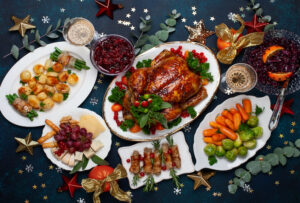
Jackie Lynch: Lots of turkey. Of all the meats it’s the highest in tryptophan, an amino acid that activates serotonin, and it’s also high in protein and low in fat. A range of colourful veg is great. Pigs in blankets are fine but just have one. It’s more about moderation than anything else.
But it’s less about the plate, it’s everything else. We drink more bubbly at Christmas than any other time of year. Sparkling wine contains twice as much sugar as white wine and three times as much as red wine. And that’s more likely to be where the damage is coming from, rather than the roast meal.
Also, start to think about some of the classic Christmas treats like mince pies and Christmas cake and pudding. None of them are going to be fantastic for your waistline, as dried fruit contains about four times as much sugar as the fresh equivalent. The best option is probably a single mince pie, as it has about half the sugar of Christmas pudding or cake.
Another thing is to think about a different dessert altogether. The BBC Good Food site has a range called Ultimate Makeover, where top chefs have looked at a classic dish and made some tweaks so it isn’t as sugary or full of saturated fat. One of my favourites is the chocolate mousse, it’s absolutely delicious but they use things like Greek yogurt instead of fresh cream, fewer eggs, more cocoa. It works out as a healthier but delicious option.
Henpicked: Cheese and crackers is another big favourite. Which cheese should we veer towards on the cheese plate?
Jackie Lynch: That’s a good question. Cheese is high in saturated fat, so go for slices instead of slabs. If you’re using a hard cheese you can get a slicer that takes a thin piece off the top, rather than you cutting off a massive chunk. The harder cheeses tend to be worse in terms of saturated fat. Brie is the least bad, it contains about 18g of saturated fat per 100g. But that’s still only 2g off the daily recommended amount for women. Cheddar is probably the next best.
Stilton is the worst offender. 100g, which isn’t that much if you’re a cheese lover, has 23g of saturated fat. That all adds up, especially if you’re concerned about heart health, cholesterol and blood pressure. Equally, worth knowing that in calcium terms, the harder cheeses tend to be higher. If you’re looking to boost your calcium there’s a win there too. That’s why I don’t like to talk about food as good and bad, as it’s usually somewhere in between.
Henpicked: What about the Boxing Day meal and the traditional bubble and squeak?
Jackie Lynch: I love bubble and squeak, and I think this is my favourite Christmas meal with the cold meats. Having an egg on top is a great idea. Egg yolk contains a compound called cysteine, which helps to break down toxins in the liver. If you’ve overdone it a bit the day before, it could help to speed up your hangover. The ideal hangover-busting breakfast would be poached egg with wilted spinach.
Spinach is packed with vitamin C, which supports the production of glutathione, which is responsible for about 60% of the detoxification pathways in the liver. Top tip, taking a gram or two of vitamin C before bed if you know you’ve overdone it could help to avoid a hangover or reduce the severity. Spinach is also packed with B vitamins, these are the links in the chain reaction of energy production and can help perk you up a lot.
Henpicked: If someone is choosing alcohol, what might be a good choice?
Jackie Lynch: Alcohol can be a real killer when it comes to the menopause, especially with hot flushes. Be careful particularly with wine, which can be the worst trigger. In terms of your waistline, red wine is a better option than white wine or bubbly, as it contains very little sugar, and of course the white spirits like gin or vodka don’t really have sugar in.
But what I’m really excited about is the fact that non-alcoholic drinks have started to become much more interesting. It used to be that if you didn’t want to drink you had to have some processed bottle of orange juice in a pub or some horrid fizzy soda. But now there’s a whole industry of either distilled products, botanicals similar to gin, or the fermented products like kombucha, which brings its own benefits in supporting the gut microbiome. One of the problems before is you were stuck with a drink you didn’t like, it was nothing to do with the alcohol.
Some alcohol-free options I’d recommend are: Seedlip, M&S Sparkling Botanical , Mother Root Ginger Switchel, Moju Ginger shots, Dry Dragon Kombucha, Lucky Saint alcohol free beer, Three Spirit Drinks, Martini non-alcoholic aperitivo, Pentire Adrift Botanicals, Wild Eve Botanical, Copenhagen, Nozeco, Nosecco and Gordon’s 0%.
Henpicked: Do these non-alcoholic versions have less sugar in them?
Jackie Lynch: It depends. Something like Nozeco and Nosecco can be quite high in sugar, but by and large the others aren’t too bad. The botanicals are aping gin, so tend to be a pretty good option. Low alcohol versions of wine don’t automatically mean they’re lower in sugar. 4g of sugar is about a teaspoon so have a look at the label.
Prosecco is generally much more sugary than champagne. Also I’d be more inclined to have a glass of dry champagne rather than a Buck’s Fizz, as orange juice contains roughly as much sugar as a can of Coke.
Watch the video here:

Jackie Lynch is the founder of the WellWellWell Nutrition Clinic where she specialises in women’s health and the menopause.
She’s a regular contributor of nutrition features in the media and her clinical work has inspired her to publish the following books:
- Va Va Voom: The 10-Day Energy Diet (Headline, 2017)
- The Right Bite: Smart Food Choices for Eating on the Go (Nourish 2016)
- And her amazing latest book, The Happy Menopause – smart nutrition to help you flourish (2020).
She’s also the host of the popular diet & lifestyle podcast, The Happy Menopause – you can find out more here:
Check out the rest of Henpicked’s Lunch & Learn video series!

Available from Bloomsbury, Waterstones, Amazon and good bookshops.